
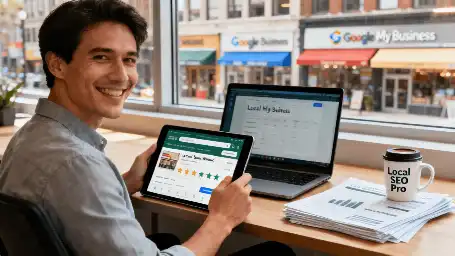
In today’s hyper-connected world, the digital landscape is no longer a separate entity from the physical marketplace.
For small businesses, especially those with a brick-and-mortar presence, bridging the gap between online discovery and doorstep arrival is paramount.
Local online marketing offers a powerful toolkit to achieve precisely this, transforming digital visibility into tangible foot traffic and, ultimately, increased sales.
This guide dives into effective local online marketing strategies, providing a roadmap for small businesses to connect with their local customer base and thrive.
The Imperative of Local Online Presence for Offline Success
The modern customer journey almost invariably begins online, even when the ultimate destination is a physical store.
Potential customers turn to search engines and social media to find local businesses, compare options, and make decisions.
A robust local online presence isn’t just about being discoverable; it’s about building trust, engaging with the community, and guiding potential customers directly to your door.
For any small business looking to grow, establishing and optimizing this digital footprint is no longer optional – it’s a fundamental requirement for sustained offline success.
Without a strong online presence, you risk becoming invisible to the very customers actively seeking what you offer.
What This Guide Will Cover: Linking Online Marketing Directly to Measurable Foot Traffic and Sales
This guide will equip you with a comprehensive understanding of actionable local online marketing strategies.
We will move beyond generic advice to focus on the specific tactics that directly influence foot traffic and drive sales for your business.
You will learn how to optimize your foundational digital assets, leverage search engine power, cultivate a trustworthy reputation, and employ targeted advertising.
Crucially, we will explore how to integrate these online efforts to create a seamless customer journey that culminates in a visit to your physical location.
By the end of this article, you will have a clear framework for transforming your local online marketing from a digital expense into a revenue-generating engine.
Pillar 1: Your Optimized Google Business Profile – The Digital Front Door
Your Google Business Profile (GBP) is arguably the most critical component of your local online presence.
It acts as your digital storefront, appearing prominently in Google Search and Google Maps results.
Optimizing this profile is the first and most impactful step in making your business easily discoverable by local customers actively searching for your products or services.
Claiming and Verifying Your Google Business Profile (GBP) for Foundational Visibility
The very first action any local business must take is to claim and verify their Google Business Profile.
This process establishes your business’s official presence on Google.
Without verification, your listing may be incomplete, inaccurate, or even unclaimed, severely limiting its visibility and your ability to manage it.
Verification typically involves receiving a postcard with a code at your business address, ensuring that you are the legitimate owner.
Once verified, you gain full control over how your business appears across Google Search and Google Maps, laying the essential groundwork for all subsequent local marketing efforts.
This foundational step ensures that when a customer searches for businesses like yours nearby, your verified listing has the best chance of appearing.
Comprehensive Profile Optimization for Maximum Local Search Impressions
A claimed and verified GBP is only the starting point.
True visibility comes from comprehensive optimization.
Ensure all fields are meticulously filled out with accurate and up-to-date information.
This includes your business name, address, phone number (NAP consistency is vital), operating hours (keeping them current, especially for holidays), website link, and business category.
Crucially, leverage the services section to detail exactly what you offer, using keywords that potential customers might search for.
Upload high-quality photos and videos of your business, products, and services; visually appealing content significantly boosts engagement.
Utilize the Q&A feature to proactively answer common customer questions.
By keeping your profile rich, accurate, and engaging, you maximize your chances of appearing in local searches and Google Maps, leading to more impressions and potential customer interactions.
It’s a well-established fact that businesses with complete, well-optimized GBP listings receive 5x more views on Google Maps.
Harnessing Google Reviews: Building Trust and Boosting Google Ranking
Online reviews are a cornerstone of building trust and a strong reputation, and Google reviews are paramount.
Positive reviews act as powerful social proof, influencing potential customers’ decisions.
Encourage your satisfied customers to leave reviews on your GBP.
Make it easy for them by providing a direct link.
Equally important is actively responding to all reviews, both positive and negative.
Responding professionally and empathetically to negative feedback demonstrates your commitment to customer satisfaction and can turn a potentially damaging situation into an opportunity to showcase excellent service.
The volume, recency, and quality of your Google reviews directly impact your local search rankings.
Businesses that actively manage their reviews often see a significant boost in their visibility and appeal to new customers.
Leveraging Google Maps and Local Search Results for Discovery
Your GBP is intrinsically linked to Google Maps.
When customers search for businesses locally, Google Maps often displays a map with pinned businesses and a related list.
Optimizing your GBP ensures your business appears accurately on these maps.
For local queries, 42% of searchers click on a result inside the local pack or Google 3-pack.
Being present and optimized in this valuable real estate significantly increases the likelihood of being discovered by users who are actively looking for a business like yours in their immediate vicinity.
Consistent NAP (Name, Address, Phone number) across all your online listings, especially your GBP, is crucial for Google to trust and rank your business effectively on Maps.
Pillar 2: Local SEO – Guiding Customers Directly to Your Business
Local Search Engine Optimization (SEO) is the practice of optimizing your online presence to attract more business from relevant local search engines like Google.
It’s about ensuring that when someone searches for a product or service you offer in your geographic area, your business appears prominently and is perceived as a relevant, trustworthy option.
Understanding Local Keyword Strategy to Capture Intent
Effective local SEO begins with understanding the language your local customers use.
This means identifying local keywords, which often include geographical modifiers like “near me,” “in [city name],” or “[neighborhood].
” For instance, instead of just “plumber,” your target keywords might be “emergency plumber San Francisco” or “best plumber near me.
” Analyze what terms potential customers are typing into Google to find businesses like yours.
Tools like Google Keyword Planner and simply observing the “People also ask” section and related searches on Google can provide valuable insights.
By targeting these specific local keywords, you align your online content with user intent, making it more likely that they will click on your listing when they are ready to make a purchasing decision.
On-Page Optimization for Local Relevancy and Search Rankings
Once you’ve identified your local keywords, you need to integrate them naturally into your website’s content.
This “on-page” optimization involves strategically placing these keywords in your website’s titles, headings, meta descriptions, and body text.
Your website’s content should clearly communicate what you do, where you do it, and why customers should choose you over competitors.
Create location-specific landing pages for different service areas if applicable.
Ensure your NAP information is prominently displayed on your website, ideally on every page, and that it matches your GBP and other online listings precisely.
This consistency signals to Google that your business is legitimate and firmly rooted in the local community, which directly influences your search rankings.
Building Local Citations and Business Listings for Authority
Local citations are online mentions of your business’s name, address, and phone number (NAP) on other websites.
These include online directories like Yelp, Yellow Pages, and industry-specific listings.
Having consistent and accurate citations across a wide range of reputable platforms signals to search engines like Google that your business is established and trustworthy within the local ecosystem.
Aim for consistency in your NAP information across all listings.
Regularly audit your existing citations to correct any inaccuracies and seek out new, relevant directories to expand your online presence.
Strong citation profiles significantly contribute to your local SEO authority and improve your chances of appearing in local search results.
The Crucial Role of a Mobile-Optimized Website (Responsive Web Design)
In today’s mobile-first world, a mobile-optimized website is non-negotiable for local marketing.
A significant portion of local searches are performed on smartphones, often by consumers on the go who are looking for immediate information or directions.
A responsive web design automatically adjusts to fit any screen size, ensuring a seamless user experience.
This includes easy navigation, legible text, clickable phone numbers, and fast loading times on mobile devices.
A poor mobile experience can drive potential customers away before they even consider visiting your store.
Pillar 3: Cultivating a Stellar Online Reputation and Driving Customer Engagement
Your online reputation is a powerful asset that directly influences customer perception and drives foot traffic.
Beyond just collecting reviews, it involves actively managing your brand’s image and engaging with your local community online.
Proactive Online Review Management Beyond Google
While Google reviews are vital, your online reputation extends to other platforms.
Directories like Yelp, Facebook, and industry-specific review sites all contribute to how potential customers perceive your business.
Implement a strategy to monitor and respond to reviews across all these platforms.
Encourage satisfied customers to leave feedback wherever they are most active.
Addressing customer concerns promptly and professionally on any platform shows that you value feedback and are committed to providing a positive experience.
A consistent, positive online reputation across multiple channels builds a strong foundation of trust that encourages more customers to visit your physical location.
Leveraging Social Media for Authentic Local Connection and Brand Recognition
Social media platforms like Facebook and Instagram are invaluable tools for connecting with your local audience on a more personal level.
Use them to showcase your brand personality, highlight what makes your business unique, and share updates about new products, services, or events.
Engaging content, such as behind-the-scenes glimpses, customer spotlights, or local interest stories, can foster a sense of community and loyalty.
Regularly posting valuable, relevant content helps keep your brand top-of-mind for local consumers.
92% of businesses use social media for marketing, demonstrating its widespread adoption and importance in today’s marketing mix.
Running Targeted Social Media Ads (Facebook, Instagram) for Local Reach
To amplify your social media efforts and reach a more specific local audience, consider running targeted ads on platforms like Facebook and Instagram.
These platforms offer sophisticated targeting options that allow you to reach users based on their location, demographics, interests, and behaviors.
You can run campaigns designed to drive local website traffic, increase brand awareness within a specific radius, or even promote special offers that encourage in-store visits.
For instance, you can target users within a 5-mile radius of your business with an ad promoting a limited-time discount.
67% of 18-24 year olds use Instagram for local business information, followed by 62% using TikTok, highlighting the effectiveness of these platforms for reaching younger demographics.
Pillar 4: Accelerating Foot Traffic with Targeted Local Advertising (Paid Ads)
While organic strategies are crucial for long-term growth, paid advertising can provide an immediate boost in visibility and drive targeted foot traffic, especially for time-sensitive promotions or to reach customers who may not discover you through organic search.
Mastering Google Ads (PPC Advertising) for Immediate Local Visibility
Google Ads (formerly AdWords) offers powerful pay-per-click (PPC) advertising that allows you to appear at the top of Google search results for specific local keywords.
By setting up location-based targeting, you can ensure your ads are only shown to users within a defined geographic area.
This is incredibly effective for capturing high-intent customers who are actively searching for your products or services.
For example, a restaurant could run ads for “pizza delivery near me” targeting users within a 10-mile radius.
The key is to bid on relevant local keywords, craft compelling ad copy, and direct users to a relevant landing page on your website or your GBP.
Harnessing Google Maps Ads and Google Local Services Ads (if applicable)
Beyond standard Google Search Ads, Google offers specialized options for local businesses.
Google Maps Ads place your business directly on the map with prominent pins and allow for rich business information to be displayed.
This is ideal for businesses where customers need directions or want to quickly see location-based details.
Google Local Services Ads (if available in your region and industry) appear at the very top of search results and are specifically designed for service-based businesses.
These ads often feature a “Google Guaranteed” or “Google Trusted” badge, building immediate credibility and trust with potential customers seeking local services.
Exploring Other Paid Ad Opportunities: Display Ads, Retargeting, and Social Media Ads
The paid advertising landscape extends beyond Google search.
Display ads can be used to build brand awareness within local online publications or websites your target audience frequents.
Retargeting campaigns are particularly effective; they allow you to show ads to users who have previously visited your website, reminding them of your business and encouraging them to return or visit your store.
Combined with the targeted social media ads discussed earlier, these various paid channels can create a multifaceted advertising strategy that consistently puts your business in front of local consumers.
Budgeting and ROI for Pay-Per-Click Advertising
For small businesses, understanding budgeting and Return on Investment (ROI) for PPC advertising is crucial.
Start with a clear understanding of your marketing goals and how much you can afford to spend per day or month.
Track your campaigns diligently.
Key metrics to monitor include cost-per-click (CPC), click-through rate (CTR), conversion rate (e.g., phone calls, store visits originating from ads), and ultimately, the revenue generated from these campaigns compared to their cost.
While 78% of UK local businesses have significantly increased their digital marketing budgets in 2025, it’s essential to ensure your spend is efficient and delivering tangible results.
Regularly analyze your data to optimize your campaigns, reallocate budget to your best-performing ads, and ensure you’re maximizing your ROI.
Pillar 5: Integrating Online and Offline for a Seamless Customer Journey
The most successful local online marketing strategies don’t operate in isolation.
They integrate seamlessly to create a unified customer experience, from initial online discovery to the final in-store purchase.
Mapping the Local Customer Journey: From Online Discovery to In-Store Purchase
Understand the path a typical local customer takes.
It often starts with an online need or question, leading to a search on Google or social media.
They might find your Google Business Profile, visit your website, read reviews on Yelp, and then decide to visit your store.
Each of these digital touchpoints influences their perception and likelihood of conversion.
By mapping this journey, you can identify opportunities at each stage to reinforce your brand message, provide helpful information, and encourage the next step towards an in-store visit.
Offline-to-Online Synergy: Driving Digital Engagement from Your Physical Location
The synergy shouldn’t be one-way.
Encourage customers already in your physical location to engage with your online presence.
This can involve prompting them to follow your social media channels, leave a review after their purchase, or sign up for your email newsletter.
Display QR codes on signage or receipts that link directly to your Google Business Profile, social media pages, or a special offer on your website.
This creates a feedback loop, turning in-store customers into online advocates and keeping them engaged with your brand between visits.
Online-to-Offline Conversion Strategies: Turning Digital Interest into Foot Traffic
The ultimate goal is to convert online interest into physical visits.
Strategies include ensuring your GBP clearly displays your address and provides easy directions.
Use calls to action in your online ads and social media posts that explicitly encourage store visits, such as “Visit us today!” or “Shop in-store for exclusive deals.
” Promotions advertised online, like a “mention this ad for 10% off,” are direct incentives for customers to come into your business.
The speed and ease with which a customer can find your location and get there from their initial online search are critical for conversion.
Building Community and Local Relationships Beyond Online Channels
While online marketing is essential, fostering genuine local relationships remains a powerful differentiator.
Participate in local events, sponsor community initiatives, or partner with other local businesses.
These offline activities build goodwill and brand loyalty that online efforts can amplify.
When customers feel a connection to your business beyond just transactions, they become more invested and are more likely to choose you and recommend you to others.
These community ties often translate into positive online mentions and reviews, further strengthening your local presence.
Pillar 6: Measuring Success and Optimizing Your Local Marketing Efforts
To ensure your local online marketing strategies are effective, you must track performance, analyze data, and continuously optimize your efforts.
This data-driven approach ensures you’re investing your resources wisely and achieving the best possible results.
Key Local Marketing KPIs: Tracking What Matters for Foot Traffic and Sales
Define Key Performance Indicators (KPIs) that directly reflect your goals of driving foot traffic and sales.
Essential metrics include:
- Google Business Profile Insights: Track views, searches (direct vs. discovery), website clicks, direction requests, and phone calls originating from your GBP.
- Website Analytics (Google Analytics): Monitor traffic sources, user behavior on your site, conversion goals (e.g., form submissions, appointment bookings), and geographic data of your visitors.
- Social Media Metrics: Track engagement rates, reach, follower growth, website clicks from social and leads generated.
- Paid Ad Performance: Monitors click-through rates (CTR), cost per click (CPC), conversion rates, and return on ad spend (ROAS) for your Google Ads and social media campaigns.
- Review Metrics: Track the number of new reviews, average rating, and sentiment.
By consistently monitoring these KPIs, you gain a clear understanding of what’s working and what isn’t, allowing you to make informed decisions about your marketing strategy.
The increasing reliance on local search means that 76% of smart speaker users do local voice searches weekly, with about 46% doing so daily, emphasizing the need for accessible, data-informed marketing strategies.
Local Marketing the new tactic
Local online marketing is no longer a supplementary tactic; it is the engine that drives modern small business growth.
By strategically optimizing your Google Business Profile, mastering local SEO, cultivating a strong online reputation, and leveraging targeted advertising, you can effectively capture the attention of local customers.
The key lies in understanding and optimizing the entire customer journey, from their initial digital search to their eventual visit to your physical location.
Start by ensuring your Google Business Profile is complete, accurate, and actively managed, as it serves as your digital front door.
Integrate local keywords into your website content and build consistent business listings to enhance your local SEO.
Actively manage your online reviews across all platforms and use social media to build authentic connections with your community.
When necessary, employ targeted paid advertising on platforms like Google and social media to accelerate visibility and drive immediate foot traffic.
Remember that the most effective approach is an integrated one, where all your online efforts work cohesively to guide customers seamlessly to your door.
Finally, never underestimate the power of measurement.
Regularly track your key performance indicators to understand the impact of your strategies.
Use this data to refine your approach, optimize your campaigns, and ensure your local online marketing efforts are consistently driving tangible results – more foot traffic and increased sales for your small business.
By embracing these strategies, you can transform your online presence into your most powerful local sales driver.
